Choosing a CPA review course isn’t exactly a light decision. It’s more like picking the study partner you’ll be spending the next few hundred hours with.
No pressure, right?
The CPA exam is a licensing exam administered by the AICPA, and national pass rates for core sections often hover around the 40–60% range, depending on the testing window. In other words, most candidates do not pass without serious preparation.
UWorld and Becker are two of the most recognized names in CPA prep. Both offer expansive question banks, video instruction, task-based simulations, and adaptive technology. The difference comes down to structure, depth, delivery style, and how the platform feels when you’re actually spending hundreds of hours inside it.
After working through both, here’s what stood out.
Key Takeaway: Becker or UWorld?
- If you want structured, streamlined studying with shorter videos and a guided flow, Becker is likely the better fit.
- If you value built-in coaching, tutoring, and live instruction options, Becker has the edge.
- If you want maximum content volume and longer deep-dive lectures, UWorld may appeal more to you.
- If highly detailed, textbook-style answer explanations are your priority, UWorld delivers more depth per question.
- If you prefer a polished interface with strong instructor personalities and exam tips woven into lectures, Becker stands out.
Overview: Becker vs. UWorld CPA
Becker CPA Review: Structured and Instructor-Driven

Becker includes:
- 8,000+ multiple-choice questions
- 500+ task-based simulations
- 900+ videos (averaging ~14 minutes each)
- Answer explanations averaging ~151 words
Becker’s biggest strength is how cohesive the experience feels. The lessons flow in a clear rhythm: short video segments followed by practice. Most videos land in that sweet spot — long enough to explain the concept, short enough that you’re not checking the timestamp every five minutes.
And yes, if you’ve been in the CPA world for a while, you probably noticed the Peter Olinto shift. While he’s no longer actively teaching with Becker (you’ll now find him over at UWorld), his legacy teaching style is still part of what built Becker’s reputation. When he was on screen, his delivery felt conversational, not scripted. There was energy without trying too hard, and he had a way of flagging “easy points” so you knew exactly what was worth locking in for exam day.
The slides themselves are clean and distraction-free. Instead of overwhelming you with text, key terms appear as the instructor explains them. It sounds simple, but that pacing keeps you engaged during longer study sessions.
That said, Becker can sometimes front-load instruction. You may work through a longer stretch of video before getting into practice questions. If you prefer learning a concept and immediately testing it, that structure might feel slightly delayed.
Extended Sale – $1,346 Off Becker CPA Pro+
Extended Sale – $1,345 Off Becker CPA Pro
Pros
-
Engaging, conversational instruction -
Streamlined layout that’s easy to navigate for long study sessions -
Strong integration of coaching, tutoring, and live class options -
Concise answer explanations that are efficient to review -
Videos are broken into shorter segments on average
Cons
-
Slightly fewer MCQs than UWorld -
Some video blocks can feel long before transitioning to practice
UWorld CPA Review: Content Depth and Analytics

UWorld includes:
- 9,000+ multiple-choice questions
- 500+ task-based simulations
- 1,400+ videos (~501 total hours)
- Answer explanations averaging ~286 words
UWorld clearly leans into volume and depth. The average video I watched ran about 21 minutes, with some getting close to 40. Only one dipped under 10 minutes. If you like comprehensive walkthroughs instead of quick summaries, that structure can feel reassuring.
The answer explanations stood out to me right away. They’re noticeably longer than Becker’s and often read like mini textbook sections, complete with charts, breakdowns, and expanded reasoning. Of course, they’re still tied to that specific question and how to solve it — but I appreciated how thoroughly they unpacked the “why” behind the answer.
At times, I did feel the volume. The platform is expansive, and without a clear pacing strategy, it’s easy to feel like you’re swimming in content. But if you’re someone who wants every angle covered and prefers fully understanding concepts instead of pattern-recognizing your way through practice, UWorld’s depth can build a lot of confidence heading into exam day.
Flash Sale – $1,600 Off UWorld CPA Elite-Unlimited Course
Pros
-
Larger question bank -
Extensive video library with long-form instruction -
Strong analytics and tracking tools -
Deep-dive coverage of topics
Cons
-
Video lectures can be long, with some having more energy than others -
If efficiency is your priority, the length can feel excessive at times -
No built-in tutoring or coaching comparable to Becker’s packages
Becker vs. UWorld CPA Feature Comparisons
| Feature |  |  |
|---|---|---|
| Access Length | 24 months to unlimited | 18 months to unlimited |
| MCQs | 8,000+ | 9,000+ |
| TBSs | 500+ | 500+ |
| Video Hours | ~213 hours | ~501 hours |
| Average Video Length | ~14 minutes | ~21 minutes |
| Answer Explanation Length | ~151 words | ~286 words |
| Live Instruction | Yes | Boot camps only |
| Tutoring/Coaching | Included in higher packages | Not integrated |
| Adaptive Tech | Adapt2U | SmartPath |
| Learn More | GET STARTED | GET STARTED |
Course Structure & Study Flow
Becker’s structure feels intentional and linear. You move from lectures to practice questions to simulations in a clear order, and you’re never left wondering what comes next. Even when a video block runs longer than expected, the next step is already lined up for you.
I tend to burn out when I have to constantly decide how to structure my own study sessions, and Becker took that off my plate. I could just log in and work through what was in front of me without overthinking it.
The downside is that Becker could sometimes stack anywhere from one to three hours of video before I got to move on to the practice section. If you prefer learning a micro-concept and immediately testing it, that pacing can feel heavy. Personally, I found myself wanting shorter learn–practice loops in certain dense topics.
UWorld’s structure feels broader and more expansive. The sheer volume of video and practice content makes the course feel like an open library. You have more depth per topic and more total hours available. That can be a strength if you want to immerse yourself in material. However, because of the length of the lectures (averaging over 21 minutes), study sessions can stretch longer than average (compared to relevant prep courses).
Without deliberate time management, it’s easy to spend a lot of time passively watching videos rather than actively practicing, whether that means practice questions or flashcards. Nevertheless, features like My Notebook make studying easier and more intuitive; essentially, there are pros and cons, but the experience was mostly positive.
The Winner: Becker. For most candidates, sustainable structure matters more than sheer depth. Becker’s flow makes long-term consistency easier.
Question Bank & Answer Explanations
The question quantity numbers are roughly even: 8,000+ MCQs for Becker and 9,000+ for UWorld. I can see where 1,000 questions might seem like a lot in theory, but personally, I don’t think it makes a major difference (it’s only an ~11% gap). Both provide more than enough volume to prepare thoroughly.
Where the difference becomes meaningful is in the explanations.
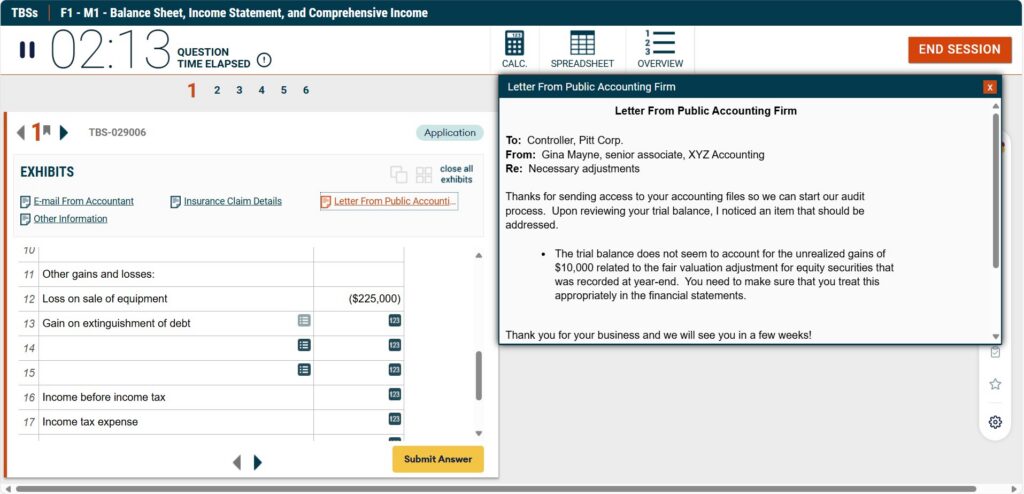
Becker’s explanations average around 151 words. They are direct and efficient. When reviewing a 30-question quiz, I could move quickly through missed problems without feeling bogged down. The focus stays on the core reasoning behind the correct answer. If you already understand most of the concept and just need clarification, Becker’s format respects your time.
UWorld’s explanations average nearly 286 words. Because they are so much longer, some students may read them like they’re textbook passages. For complex calculations, however, this depth can be extremely helpful. That said, during longer review sessions, I sometimes found myself rereading more than I needed (these explanations are thick, but they can be a tad dense). The thoroughness is undeniable, but that thoroughness can lead to re-reads, extra research, and, overall, more time spent than might be necessary to pass.
This becomes a personality question: do you want concise reinforcement or comprehensive breakdowns every time?
The Winner: UWorld for depth, Becker for efficiency. If forced to choose one overall, UWorld has the edge in explanation detail. But for candidates trying to move efficiently through large practice sets, Becker’s approach may feel more sustainable.
Video Lectures & Instruction Style
This is where the experiential difference becomes most obvious.

Becker’s videos average about 14 minutes and often fall between 8 and 20 minutes. The shorter runtime makes it easier to watch multiple videos in a row without losing interest or feeling overwhelmed. Instructor delivery, from Potenza to Olinto, feels unscripted and conversational. There’s energy, but it’s grounded—never frantic. They explain difficult topics in plain English and intermittently call out “easy points” or common traps on the exam.
The slide design also helps. Text appears as he discusses each point instead of a barrage of seeming nonsense you haven’t gotten to yet. That staggered reveal kept me engaged longer than static slides typically do.
UWorld offers far more video hours (roughly 500 in total). The average lecture runs longer than 21 minutes, and some get close to 40 minutes—I wouldn’t be surprised if some were even longer. For candidates who prefer extended walkthroughs and deep dives, this length is a bonus. However, this isn’t the case for every student.
Let’s be honest: the longer format requires more stamina. In back-to-back sessions, the time commitment is noticeable. Some instructors are highly engaging, but the tone can vary across lectures. There were definitely moments with UWorld where, though I trusted the layout and pacing, I found myself struggling to stay focused.
The Winner: Becker. While UWorld wins in volume, Becker’s pacing and delivery are easier to sustain across months of studying.
Platform Design & Usability
I’ve spent hundreds of hours, if not thousands, across a wide variety of study platforms. With that level of experience, I can’t express this enough: small design choices will end up either making your experience easier or annoying you every single time you log in.
Becker’s interface feels cohesive and refined. The deep blue, gold, and burgundy color palette against a white background is visually easy to tolerate over long sessions. Navigation is straightforward. Slides and textbook links are integrated directly beneath videos, and there’s even an option to rate content or provide feedback. That built-in loop suggests the content is actively maintained.
The digital textbook is visually clean, though I would have preferred more graphical elements instead of primarily charts and text. That said, the annotation tools are exceptional. You can add shapes, callouts, arrows, handwritten notes, and multiple types of underlines. For candidates who take extensive notes, this flexibility is meaningful.
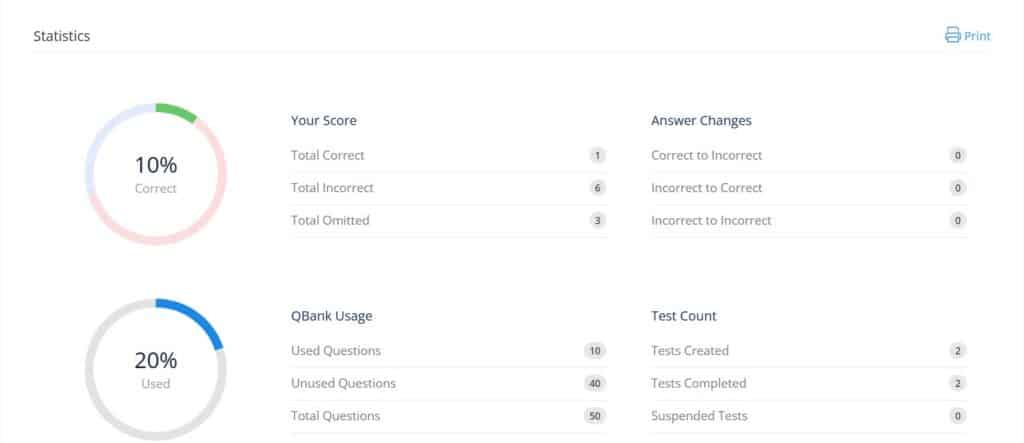
UWorld’s interface feels more data-centric. There’s a heavy emphasis on performance analytics (complete with graphs, charts, and percentages by category) and the SmartPath technology. If you’re motivated by metrics, this is major. However, while the layout is polished, it isn’t as visually dynamic as Becker’s platform. And, while loading was relatively speedy for the most part, I hit one roadblock where I needed to refresh for the page to load.
The Winner: Becker by a small margin. UWorld’s analytics are strong, but Becker’s cohesive design and integrated tools make long study sessions more comfortable.
Support & Learning Ecosystem
Support extends beyond technical help. It includes tutoring, coaching, and structured accountability.
Becker integrates one-on-one tutoring, success coaching, and live classes into several of its packages. That layered support can matter for candidates balancing work and study. Having built-in sessions creates an innate sense of accountability that’s difficult to ignore.
UWorld provides responsive support and optional live boot camps. The boot camps are interactive and useful for concentrated review, but they do not replace individualized tutoring or ongoing coaching.
The Winner: Becker. Becker’s focus on personalized support gives it the win here.
Who Should Choose Becker or UWorld?
Choose Becker if you:
- Prefer a manageable pace over having the most content
- Want shorter video lessons
- Desire coaching and tutoring sessions
- Like clear organization and streamlined design
Extended Sale – $1,346 Off Becker CPA Pro+
Extended Sale – $1,345 Off Becker CPA Pro
Choose UWorld if you:
- Want the largest possible question bank
- Prefer longer, more detailed answer explanations
- Learn best by doing and correcting as you go
- Like heavy analytics and performance tracking
Flash Sale – $1,600 Off UWorld CPA Elite-Unlimited Course
Final Verdict
Both Becker and UWorld are strong CPA review providers, and it would be difficult to go wrong with either. UWorld offers more content overall, paired with long, detailed question explanations. Becker, however, feels more balanced. The shorter videos and personal support options create a study experience that feels easier to manage from day to day compared to UWorld. So, let’s summarize.
For candidates looking for a logical structure, time efficiency, and just enough entertainment value to stay locked in, Becker has a slight advantage.
For those who want as many practice opportunities as possible—plus extensive written explanations—UWorld is a kinesthetic learner’s dream.
FAQ
It depends on your learning style. Becker offers more structured pacing and integrated support, while UWorld provides more content and longer explanations.
Yes. UWorld includes 9,000+ MCQs compared to Becker’s 8,000+.
UWorld’s videos average around 21 minutes, while Becker’s average about 14 minutes.
Yes. Becker and UWorld CPA packages include 500+ task-based simulations.

Bryce Welker is a regular contributor to Forbes, Inc.com, YEC, and Business Insider. After graduating from San Diego State University, he went on to earn his Certified Public Accountant license and created CrushTheCPAexam.com to share his knowledge from reviewing hundreds of accounting courses while helping thousands of other accountants become CPAs. Bryce was named one of Accounting Today’s “Accountants To Watch” among other accolades. As Seen On Forbes